
Why You Are Getting Leads But No Customers (And How to Fix It)
Getting enquiries but not converting them into customers? Discover the real reasons leads don't become clients — and the practical fixes that will close more sales.
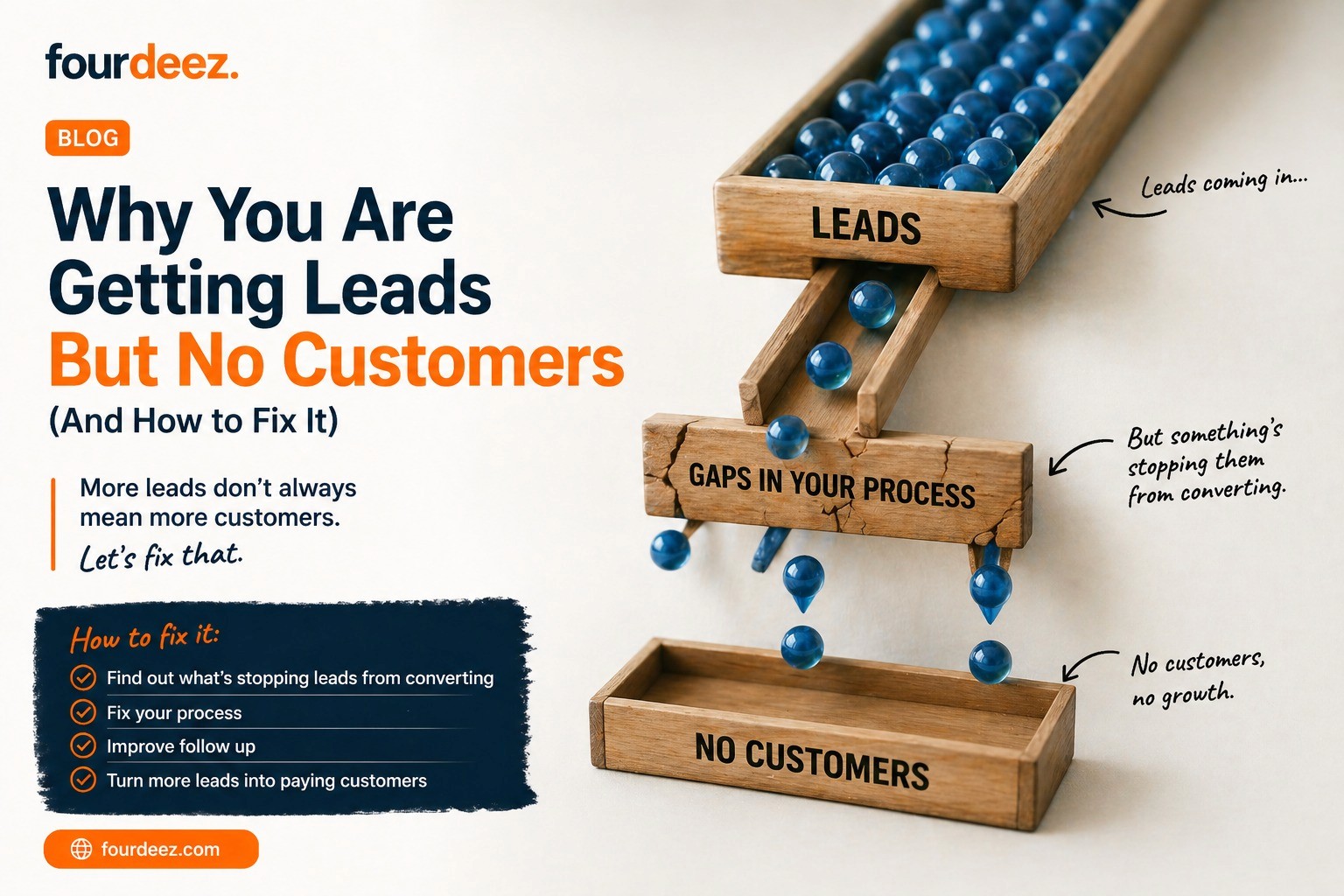
You're getting enquiries. People are filling in your contact form, sending you emails, or calling your number. But somewhere between that first contact and an actual sale, things are going quiet. Leads are going cold, conversations are stalling, and at the end of the month, the number of new customers doesn't reflect the number of enquiries you received.
This is one of the most common — and most demoralising — problems in small business marketing. And it's frustrating precisely because it feels like you're doing the hard bit. You're getting found. People are interested. So why aren't they buying?
The answer almost always lies in your conversion process — not your marketing. Here are the most common reasons leads don't become customers, and what to do about each one.
Reason 1: You're Responding Too Slowly
Speed of response is one of the single biggest factors in lead conversion. Research from multiple studies has shown that the probability of converting a lead drops dramatically after just five minutes. By the time you reply the next morning, many leads have already moved on to a competitor who got back to them first.
This doesn't mean you need to be available 24 hours a day. But it does mean that having a system to respond quickly — or at least acknowledge the enquiry immediately — is non-negotiable.
Practical fixes:
Set up an automated acknowledgement email or text that fires as soon as someone submits your enquiry form
Turn on notifications so you're alerted to new enquiries immediately
Set a personal rule to respond to all new enquiries within a few hours during business hours
Consider a live chat tool on your website for real-time responses
Reason 2: Your Follow-Up Is Weak (or Non-Existent)
Most sales happen on the second, third, or even fifth contact — not the first. Yet most businesses give up after one unanswered message. If a lead enquires, you send a quote or proposal, and they go quiet — many business owners leave it at that and wonder why the customer didn't come back.
A simple follow-up sequence dramatically improves conversion rates:
Initial response (same day)
Follow-up if no reply (48–72 hours later)
Final check-in (5–7 days after that)
Each follow-up should add value, not just chase. Reference their specific enquiry, address a common question or concern, or share a relevant piece of content that helps them move forward. The goal is to be helpful, not to pester.
Reason 3: Your Quote or Proposal Isn't Doing Its Job
If you're sending quotes that are essentially just a number on a page, you're missing an opportunity to sell. A quote is a sales document — it should give the potential customer confidence, justify the investment, and make the next step feel obvious and easy.
A stronger quote or proposal includes:
A brief recap of what you understood their problem or need to be
A clear description of exactly what they're getting
Any relevant credentials, accreditations, or social proof
A clear timeline and process so they know what to expect
A specific call to action — what do they need to do to proceed, and by when?
Also consider the presentation. A professionally formatted proposal builds far more confidence than a quick reply email with a figure at the bottom.
Reason 4: There's No Urgency or Reason to Act Now
One of the main reasons leads go cold is that there's no reason for them to make a decision. If they can come back to you in three months and still get the same deal, why would they prioritise it now?
You don't need to use high-pressure sales tactics to create urgency. Natural urgency factors include:
A genuine deadline (a seasonal offer, a price increase, limited availability)
Explaining the cost of delay (e.g. 'the longer this is left, the more expensive it tends to get')
Showing your availability window (e.g. 'we have a slot available in two weeks but I can't hold it beyond Friday')
Be honest about urgency — manufactured scarcity is transparent and erodes trust. But legitimate reasons to act sooner are entirely reasonable to communicate.
Reason 5: The Prospect Doesn't Trust You Enough Yet
Sometimes a lead is interested and has the budget, but they're not yet confident enough to commit. This is particularly common for higher-value purchases, services delivered in someone's home, or anything where the customer is taking a perceived risk.
Trust-building elements that help:
Case studies and testimonials from customers in a similar situation
Photographs of completed work
Any qualifications, accreditations, or trade body memberships
A clear explanation of your process and what happens after they say yes
A satisfaction guarantee or clear policy if things go wrong
If your website doesn't clearly communicate these things, many leads will hesitate — not because they don't want to buy, but because they're not yet certain you're the right choice.
Reason 6: You're Attracting the Wrong Leads in the First Place
Sometimes leads aren't converting because they were never a good fit to begin with. If you're consistently getting enquiries from people with the wrong budget, the wrong expectations, or the wrong problem, no amount of follow-up will fix that.
This is a marketing problem rather than a sales problem, and it requires adjusting where you're visible and how you're positioning your business. We cover this in detail here:
→ Read: Why Your Leads Are Low Quality (And How to Get Better Leads)
Reason 7: Your Pricing Isn't Positioned Correctly
If you're consistently losing out to lower-priced competitors, you have two choices: compete on price (which is a race you don't want to win), or better justify your price (which is almost always the smarter move).
People pay premium prices when they understand the value they're receiving. If your pricing isn't converting, look at whether your communication clearly conveys:
What they get that they won't get from a cheaper alternative
The quality, longevity, or outcome difference between your service and a budget option
The risk of choosing poorly in this type of purchase
Price objections are often value objections in disguise.
Building a Conversion System That Actually Works
Most of the fixes above aren't complicated — but they do need to be systematised. A conversion system that works consistently isn't one that relies on you remembering to follow up, or having a good day, or knowing intuitively when to chase and when to let go.
It's a defined process: what happens when a lead comes in, how quickly they hear from you, what they receive, when you follow up, and how you track it all.
Once you've improved your conversion rate, the next challenge is keeping those new customers coming back:
→ Read: How to Get More Repeat (Customer Retention Strategies for Small Businesses)
If you'd like help auditing your current conversion process and building a system that turns more of your leads into paying customers, we'd love to help.