
How to Get More Repeat Customers (Customer Retention Strategies for Small Businesses)
Repeat customers are more profitable than new ones. Here are proven customer retention strategies for small businesses to increase loyalty, repeat purchases, and lifetime value.
Acquiring a new customer costs significantly more than keeping an existing one. Depending on your industry, estimates suggest that attracting a new customer can cost anywhere from five to seven times more than retaining one you already have. Yet most small business marketing budgets are almost entirely directed at acquisition — getting new customers — while retention gets little to no attention.
This is one of the most overlooked opportunities in small business growth. Your existing customers already know you, already trust you, and have already experienced the value you provide. With the right approach, a meaningful proportion of them will buy from you again, more often, and with less resistance than a cold prospect.
Here's how to build customer retention into your business systematically.
Why Repeat Customers Are Your Most Valuable Asset
Before getting into tactics, it's worth understanding what repeat customers are actually worth. Customer lifetime value (CLV) — the total amount a customer spends with you across the full relationship — is a far more useful metric than the value of a single transaction.
A customer who buys from you once for £200 is valuable. A customer who buys from you four times a year for three years is worth £2,400. That shift in perspective changes how much you're willing to invest in delivering an exceptional experience, staying in touch, and giving them reasons to return.
Repeat customers also tend to:
Spend more per transaction over time (they trust you and don't need to shop around)
Be less price-sensitive than new customers
Refer friends and family at a much higher rate than one-time buyers
Cost nothing in marketing to re-activate, compared to acquiring a new customer
Strategy 1: Deliver an Experience Worth Coming Back For
This sounds obvious, but it's the foundation that every other retention strategy depends on. If the experience of buying from you is mediocre, inconsistent, or unmemorable, no follow-up email or loyalty scheme will compensate.
Consistent excellence in delivery is the baseline. Think about every touchpoint in the customer experience — from first contact to delivery, to what happens after the sale — and ask: is this as good as it could be?
Small details matter more than most business owners realise. A handwritten thank-you note. Delivery that arrives earlier than expected. A follow-up call or message to check everything went well. These small moments of over-delivery are what people remember and talk about.
Strategy 2: Stay in Touch — Consistently
Out of sight is out of mind. One of the main reasons previous customers don't buy again isn't that they're unhappy — it's simply that they've forgotten about you by the time they need something you offer again.
Staying in regular contact keeps you front of mind. The most effective way to do this for most small businesses is email marketing. A simple, consistent email newsletter — even monthly — that provides genuinely useful content relevant to your customers' lives or businesses creates ongoing touchpoints without being intrusive.
Your email list is one of the most valuable marketing assets you own. Unlike social media followers, you're not subject to algorithm changes or platform restrictions. You can reach your list directly, any time, for free.
What to include in your emails:
Useful tips or advice related to your industry
Updates about new products, services, or improvements
Behind-the-scenes content that builds connection
Exclusive offers or early access for existing customers
Customer success stories (with permission)
Strategy 3: Make It Easy (and Rewarding) to Come Back
Reduce friction for repeat purchases. If someone has to start from scratch every time they buy from you — re-entering details, re-explaining their preferences, navigating a complicated process — you're making loyalty harder than it needs to be.
For product-based businesses: saved accounts, repeat order options, and personalised recommendations make returning easier. For service businesses: retainers, subscription models, or maintenance packages give customers a reason to stay engaged between individual projects.
A loyalty or rewards scheme doesn't have to be complicated. Even something as simple as 'buy five, get one free' or a discount on the next purchase creates an incentive to return. The key is making the reward feel meaningful relative to what the customer spends.
Strategy 4: Ask for Feedback and Act on It
Customers who feel heard are far more likely to remain loyal. Sending a simple post-purchase survey — even just two or three questions — shows that you value their opinion and gives you actionable information to improve.
More importantly, if a customer mentions a problem or an area for improvement, follow up. Let them know what you've done as a result of their feedback. That kind of responsiveness turns a potentially critical customer into a loyal advocate.
Even dissatisfied customers can be retained if you handle the complaint well. A swift, genuine, solutions-focused response to a problem often creates more loyalty than if nothing had gone wrong at all.
Strategy 5: Personalise the Relationship
Customers stay loyal to businesses that make them feel valued as individuals, not just as transactions. Personalisation doesn't require sophisticated software — it starts with basic things like remembering a customer's name, referencing their previous purchases, or acknowledging milestones like a birthday or anniversary.
At a simple level, this might mean:
Sending a birthday message with a small discount
Following up after a purchase to see how they're getting on with the product
Reaching out to previous customers when a new product launches that's relevant to what they bought before
Segmenting your email list by purchase type so communications feel relevant
The goal is to demonstrate that you see them as a person, not just a sale.
Strategy 6: Create Reasons to Return
Don't wait for customers to come back on their own — give them a reason. Seasonal promotions, exclusive events, new product launches, or early access offers give existing customers a specific prompt to re-engage.
Consider the natural lifecycle of your product or service. If you sell something that needs replacing or updating after a certain period, schedule a follow-up around that time. If you offer a service that's seasonally relevant, reach out in advance of that season.
Proactive outreach to previous customers — done thoughtfully and with genuine value — is one of the most cost-effective marketing activities available to any business.
Strategy 7: Build a Community Around Your Brand
For businesses with a strong identity or niche, building a community around your brand creates a layer of loyalty that goes far beyond individual transactions. This might be a private Facebook group, an exclusive membership area, or simply a social media presence that your customers genuinely look forward to engaging with.
Community creates switching costs. A customer who is part of something — a group, a movement, a shared identity — is far less likely to defect to a competitor than one who simply buys a product.
Measuring Retention: Know Your Numbers
You can't improve what you don't measure. Key metrics to track:
Repeat purchase rate: what percentage of customers buy more than once?
Customer lifetime value: how much does the average customer spend over the entire relationship?
Churn rate: what percentage of customers don't return after their first purchase?
Average time between purchases: how long between transactions for repeat buyers?
Once you know your baseline, even modest improvements — a 10% increase in repeat purchase rate, for example — can have a significant impact on overall revenue without spending an extra pound on acquisition.
Retention Is Part of a Bigger System
Customer retention doesn't operate in isolation. The leads you attract, how you convert them, the experience you deliver, and how you follow up all connect. Getting this right across every stage is what separates businesses that grow consistently from those that are permanently stuck on the acquisition treadmill.
→ Read: Small Business Marketing System — How to Get More Customers Consistently
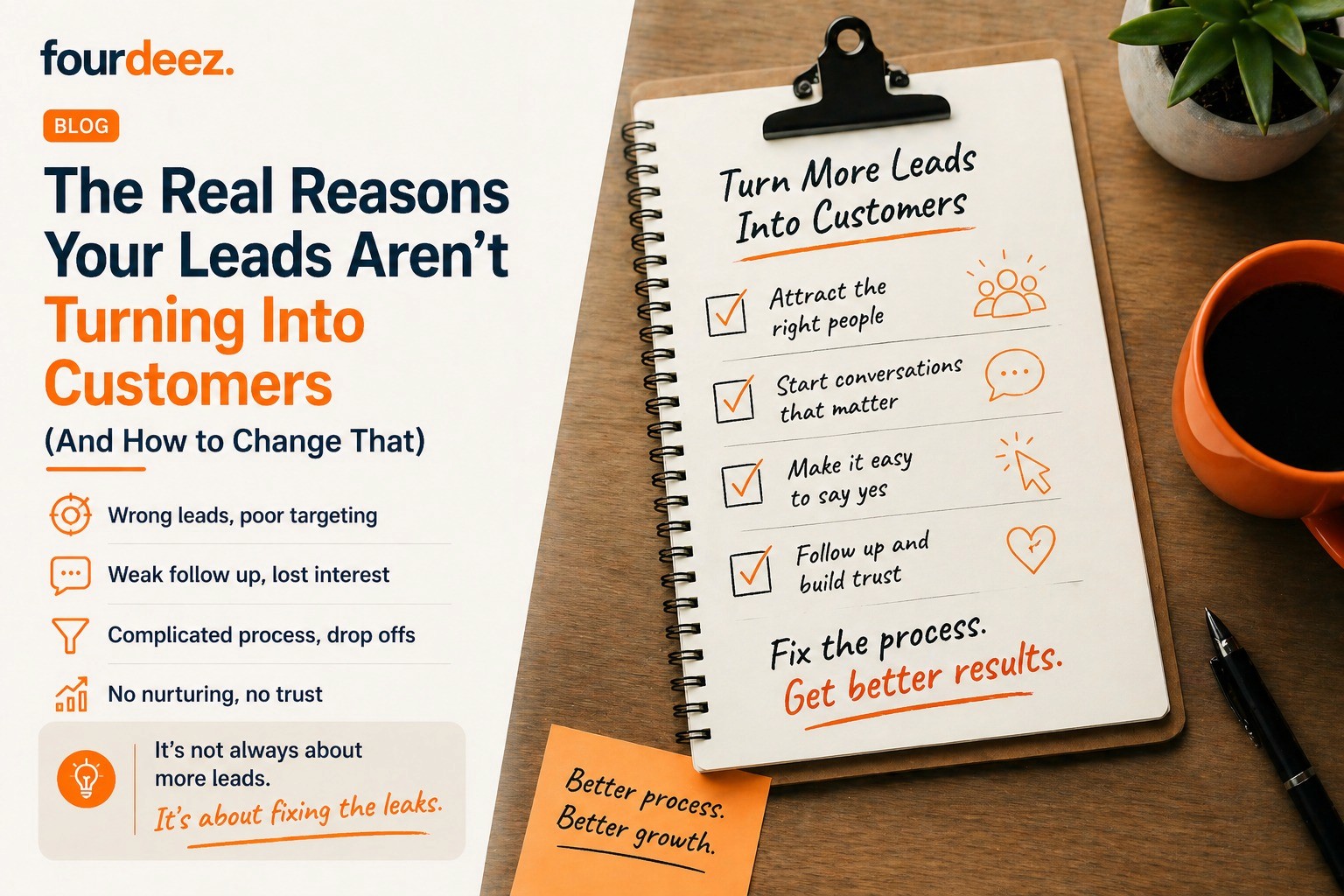
→ Why You're Getting Leads But No Customers (And How to Fix It)
If you'd like help building a retention strategy tailored to your business, we'd love to talk.